

Approximately 60% of men and 50% of women worldwide experience some form of hair loss and look for different hair transplantation methods to restore their hair. Therefore, no one can ignore the vital role of hair in maintaining facial beauty and a youthful appearance.
There are various methods for dealing with hair loss, ranging from home remedies and herbal products to shampoos, serums, medications, and ultimately, hair transplantation.
Some treatment methods may help strengthen the hair or reduce hair loss, while others may not have the desired effect. Hair transplantation is one of the most popular cosmetic procedures for restoring lost hair, and it can be performed using different techniques. Today, installment-based hair transplantation in Mashhad is also available for applicants.
In this article, we examine the different hair transplantation methods, along with the details, advantages, and differences. So, stay with us until the end.
Different Hair Transplant Methods
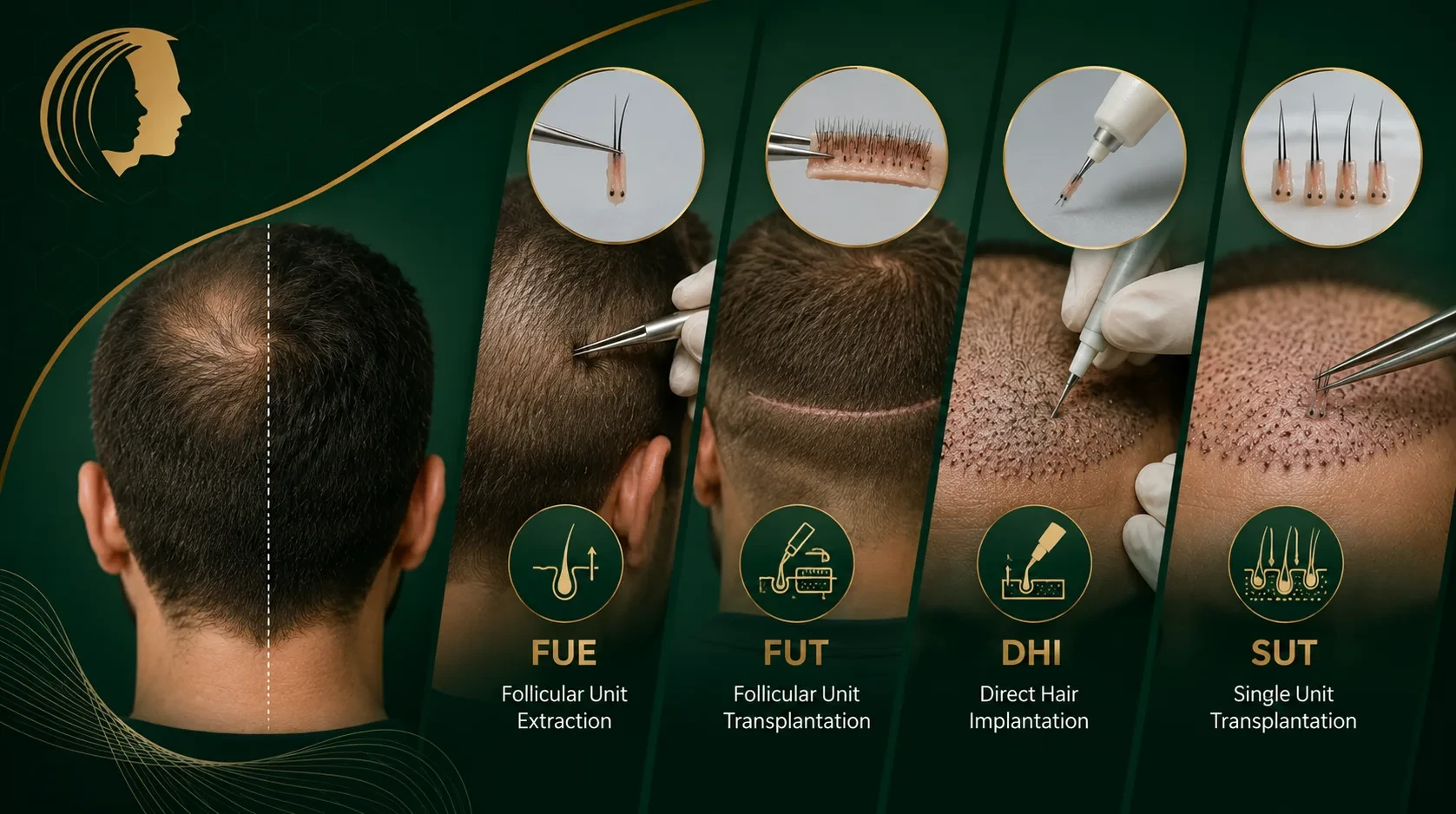
Hair transplantation involves various methods and is a specialized process that includes different techniques designed to achieve the best results according to each individual's condition.
In fact, choosing a hair transplantation method such as FIT, FUE, FUT, or more advanced and combined techniques such as Micrograft, SUT, and DHI depends entirely on factors such as the amount of donor hair available, the pattern of hair loss, the required density, and the individual's overall health.
These methods differ mainly in how grafts or hair follicles are extracted from the donor area, usually the back of the head, and how they are implanted into the recipient area. Below, we introduce the different hair transplantation methods.
SUT Hair Transplant
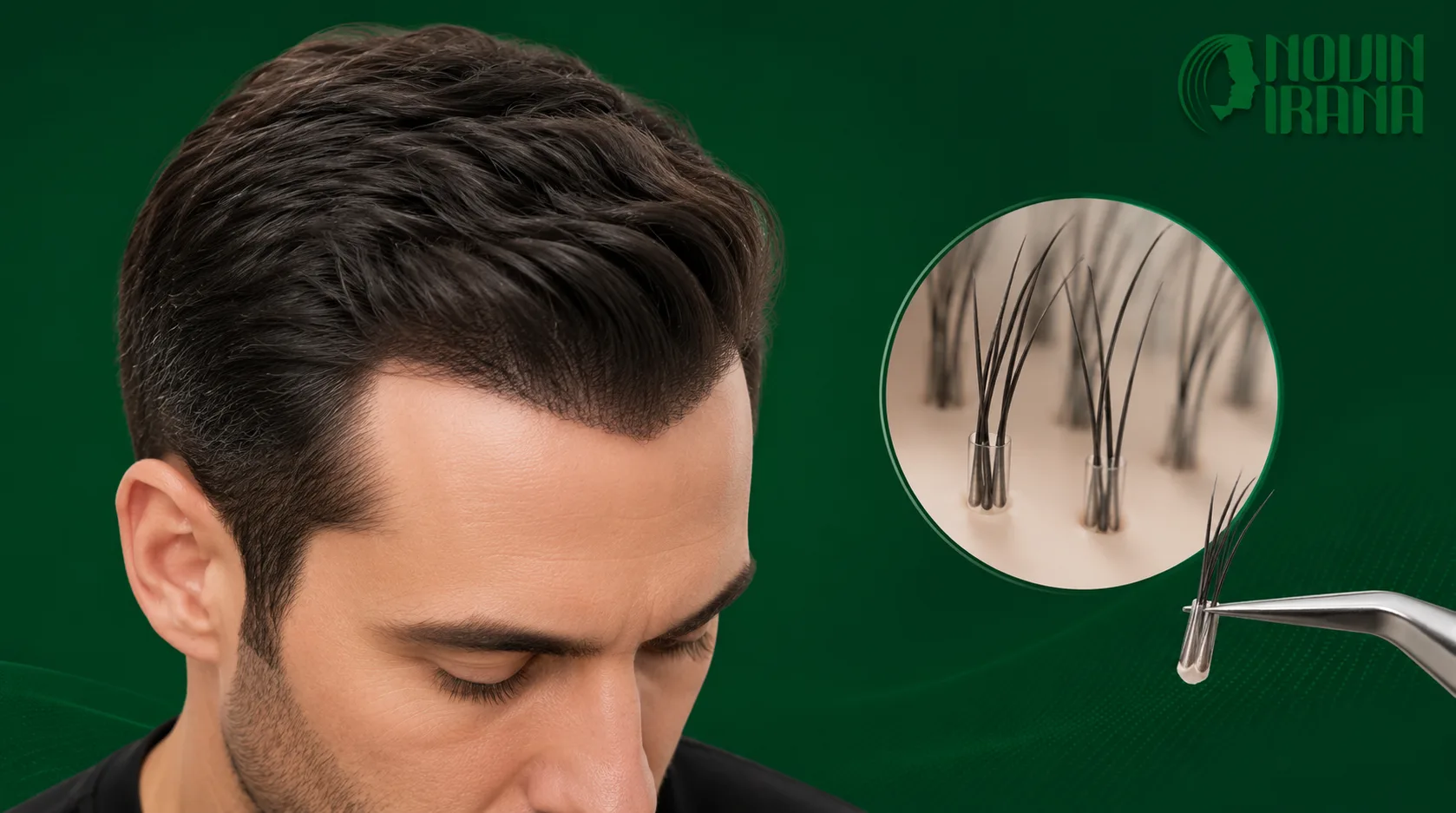
SUT hair transplantation, which is essentially a developed form of FUE using more precise instruments, is recognized as one of the most advanced hair transplantation techniques.
By utilizing automated technology, this method makes it possible to extract and implant a very large number of hair grafts in a single session. This mechanized process, performed using specialized devices and very fine punches, not only significantly reduces human error and shortens the procedure time but also minimizes damage to the follicles.
In the SUT method, each graft is placed in the recipient area with exceptional precision. This high level of accuracy includes precise adjustment of the angle, direction, and depth of implantation, ultimately resulting in a more natural hairline and higher density.
Advantages of the SUT Method
High-density hair transplantation
Very natural-looking results
Reduced graft damage
Short recovery period with no scarring
Disadvantages of the SUT Method
Higher cost
Requires shaving the donor area
Requires a highly skilled physician and medical team
Not suitable for all donor areas
FUT Hair Transplant
FUT hair transplantation, sometimes referred to as the Strip method, is a classic and proven technique that can be highly effective for individuals with extensive hair loss or those who require a large number of grafts in a single session. Unlike follicular unit extraction methods such as FUE or SUT, this technique involves removing a thin, linear strip of hair-bearing skin from the donor area, usually at the back of the head.
After extraction, the donor area is treated, and the specialized and trained medical team divides the strip of skin under powerful microscopes into natural follicular units, or grafts, which usually contain 1 to 4 hairs. These healthy, high-quality grafts are then prepared for implantation into areas of the scalp that are thinning or bald.
Advantages of FUT Hair Transplantation
Extraction of the highest number of grafts in a single session
High-quality grafts
Suitable for patients with a weaker donor area
No need to completely shave the head
Disadvantages of FUT Hair Transplantation
Permanent linear scar
Longer recovery period and possible pain
Risk of temporary numbness
More invasive compared with FUE and SUT
FUE Hair Transplant
In FUE hair transplantation, each hair follicle is individually extracted from the donor area using a microscopic punch. grafts are then implanted into areas with reduced hair density. FUE is one of the most popular hair transplantation methods, in which hair follicles are extracted one by one from the donor area and implanted into the recipient area.
This method is performed using specialized devices that allow precise and minimally invasive extraction. FUE enables the patient to have hair transplanted into the desired area without undergoing a major surgical procedure. This method reduces the risk of infection, provides a faster recovery period, and can produce natural-looking long-term results.
Advantages of the FUE Method
No linear scar
Very short recovery period
Ability to keep the hair short
Possibility of using body hair (BHT)
Disadvantages of the FUE Method
Requires completely shaving the donor area
Limited number of available grafts
Risk of follicular damage
Longer procedure time
FIT Hair Transplant
FIT is also a type of FUE that was developed by specialists at the "FIT Specialized Hair Development Institute." This method uses specialized tools and techniques for extracting hair follicles. FIT hair transplantation is another hair transplantation technique based on follicular hair units.
In this method, small groups of hairs are extracted together as a unit and then implanted into the recipient area. This technique not only provides a high level of precision but can also produce more natural-looking results. FIT helps create natural-looking hairlines and prevents unwanted side effects. It also allows for a very quick return to normal activities, which is considered one of its advantages.
Micro FIT Hair Transplant
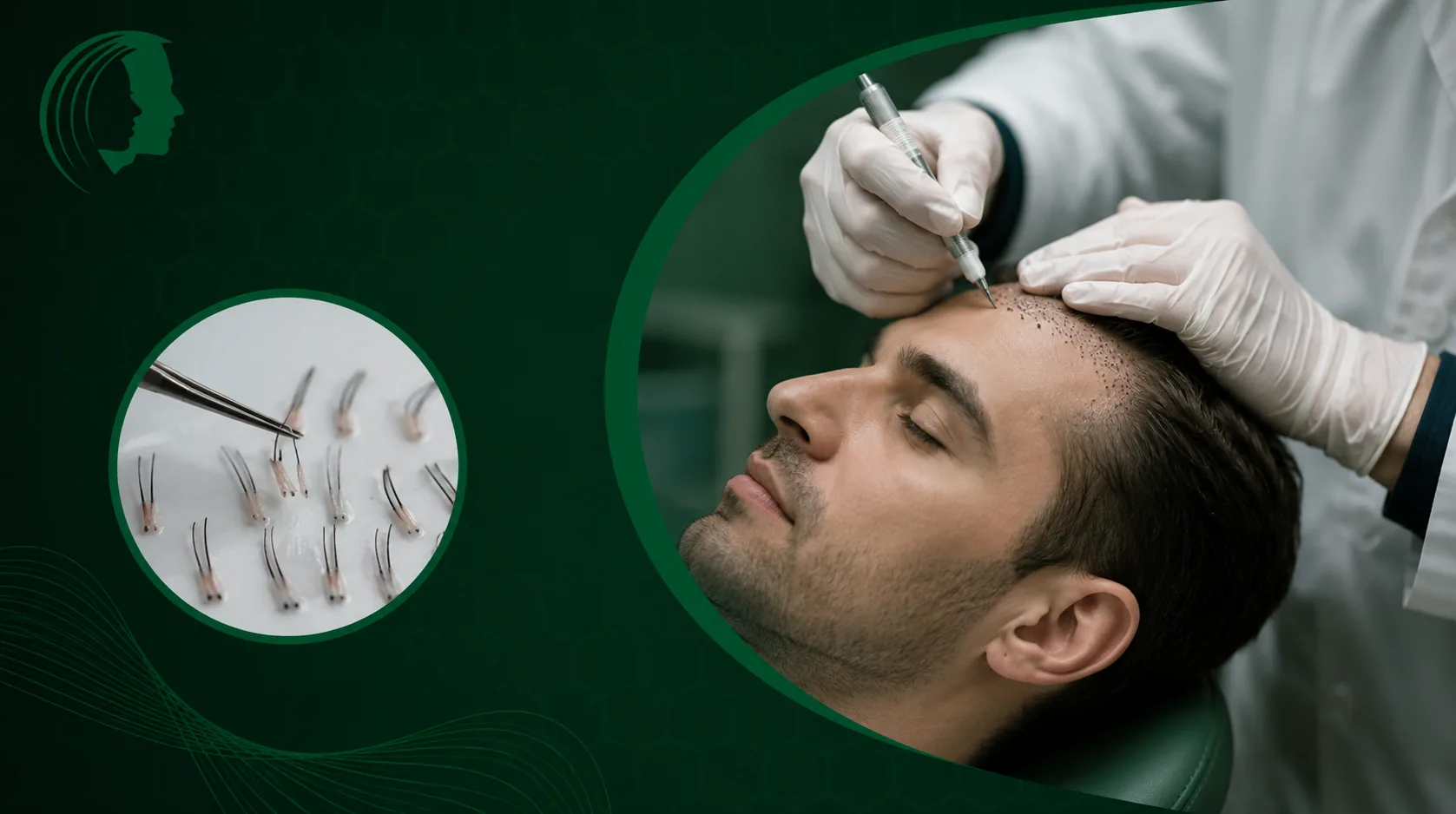
In Micro FIT hair transplantation, hair follicles are extracted individually or in smaller groups from the donor area using a microscope. These grafts are then implanted into the target areas. Micro FIT is a type of hair transplantation technique that uses microscopic instruments to separate and transfer hair follicles.
This method provides a high level of precision and allows hair grafts to be transferred more accurately. The advantages of Micro FIT include natural-looking results and better graft placement in the recipient area. This method is also suitable for individuals who are looking for precise and subtle changes in their hair design.
Advantages of Micro FIT Hair Transplantation
Very high density and a natural appearance
Minimal invasiveness and no bleeding
Very short recovery period
Reduced graft damage
Possibility of hair transplantation without partial shaving
Disadvantages of Micro FIT Hair Transplantation
Higher cost
Requires a high level of expertise and experience
Longer procedure time
Requires shaving the head in most cases
Micrograft Hair Transplant
In Micrograft hair transplantation in Mashhad, smaller groups of hair follicles are extracted together from the donor area and implanted into areas with reduced hair density. Micrograft is an advanced hair transplantation technique performed using a microscope to separate and transfer hair grafts.
In this method, each graft is transferred precisely and with a high level of concentration, resulting in accurate and natural-looking results. Micrograft involves carefully examining and classifying hairs according to their size and direction, making it suitable for individuals who are looking for precise results and greater control over hair design.
Advantages of Micrograft Hair Transplantation
Natural results and high density
Minimal invasiveness and fast recovery
Precise control over hair growth direction
Optimal use of the donor area
No linear scar
Disadvantages of Micrograft Hair Transplantation
Highly dependent on the surgeon's skill
Relatively high cost
Long procedure time
Hair shaving is often required
BHT Hair Transplant
BHT hair transplantation refers to hair transplantation from other parts of the body, such as the chest or back. This method is used for patients who have a limited amount of scalp hair and wish to use hair from other areas of their own body.
Body hair transplantation is a new and effective approach for addressing areas with reduced hair density. In this method, hair is extracted from areas such as the back, chest, or legs and transplanted into areas with thinning or low hair density. This method allows the patient to increase hair density accurately by using their own hair. Its advantages include a reduced risk of infection, natural-looking results, and the use of the patient's own body hair.
Advantages of the BHT Method
Increasing the available donor hair supply
Covering FUT scars
Natural appearance of beard hair
Minimally invasive procedure
Disadvantages of the BHT Method
Differences in hair growth cycles
Lower density of body hair
Requires a highly skilled surgeon
Differences in hair texture and color
Beard Hair Transplantation
Beard hair transplantation, which is a subset of BHT body hair transplantation and is performed using the FUE technique, is recognized as an important alternative and complementary solution, particularly when the standard donor hair supply at the back of the head is limited or weak.
In this procedure, thick and stable beard hairs, which generally have a longer growth phase than other body hairs, are extracted using fine punches from safe areas with a low risk of hair loss. They are then transplanted into bald or thinning areas of the scalp, particularly the mid-scalp or crown, where greater volume and thickness are required.
This technique not only helps significantly increase overall hair density but can also provide more natural and satisfactory results due to the relative similarity between beard and scalp hair texture. Among the notable advantages of this method are a shorter recovery period in the beard area and the ability to perform the procedure more easily in a clinical setting with minimal surgical risks, provided that the patient's beard area is suitable for harvesting a sufficient number of grafts.
Hair Transplantation with PRP
Scalp hair PRP is a highly effective supportive and strengthening treatment that utilizes the body's own natural healing abilities to improve hair transplantation results. In this advanced technique, the patient's blood is collected in a clinical setting and then centrifuged to obtain platelet-rich plasma, which contains growth factors, cytokines, and healing proteins. This concentrated plasma is then injected directly into the donor area, the recipient area before or during transplantation, or thinning areas of the scalp that require strengthening.
This important process significantly increases blood circulation to the transplanted follicles and supplies essential growth factors. As a result, it not only helps reduce inflammation and accelerate the healing process after surgery but also strengthens existing follicles and improves the speed and quality of transplanted hair growth. PRP is considered a safe and biocompatible method that eliminates the risk of allergic reactions and can significantly improve graft survival and final hair density.
?Which Hair Transplant Method Is the Best
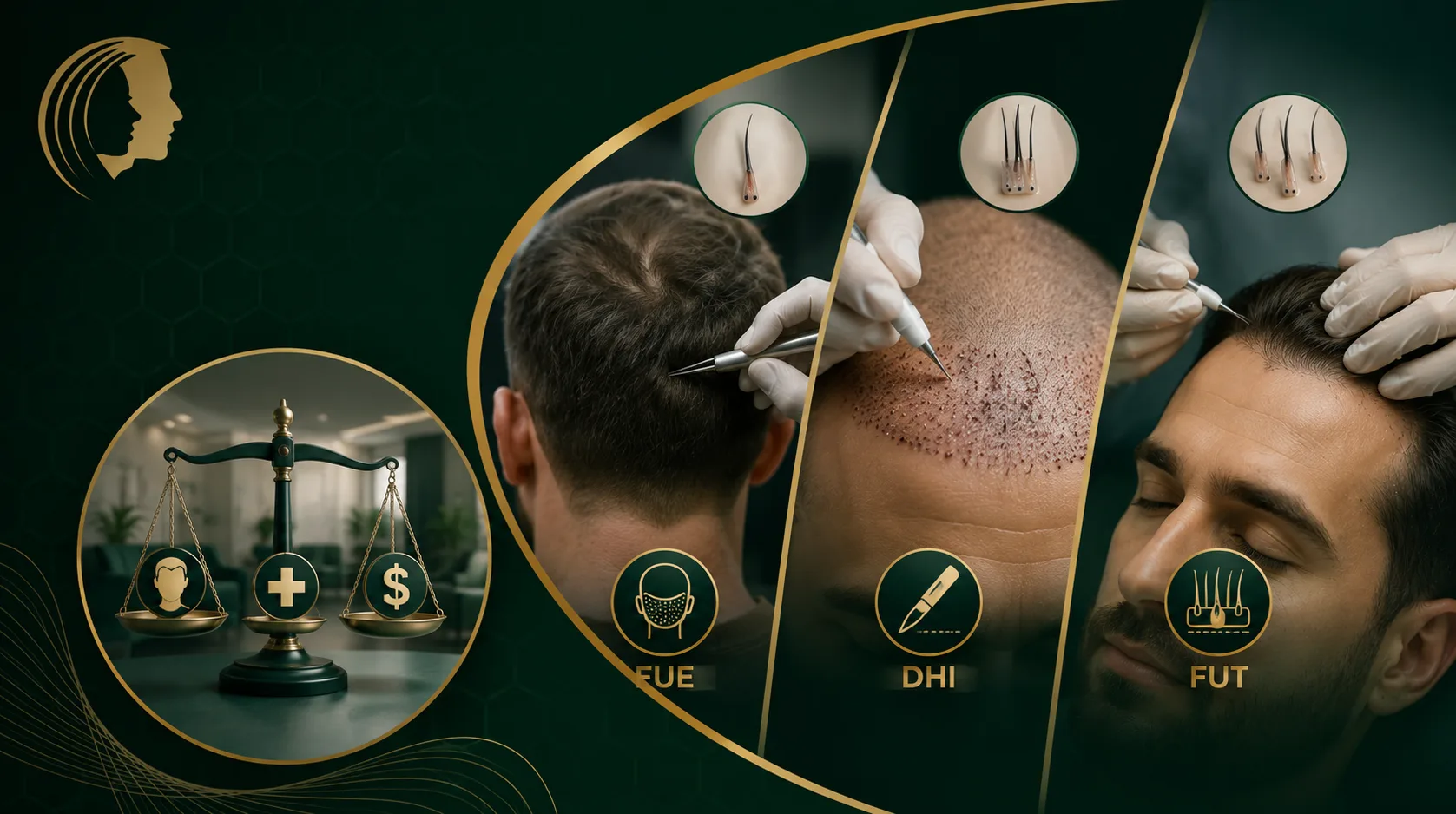
The best hair transplantation technique depends on your hair type, goals, and medical history. For most patients, FUE and DHI provide the most natural-looking results with minimal recovery time. FUE is ideal for people who want flexibility and a faster recovery, while DHI provides precise control over hair angle and density, making it ideal for precise hairline restoration or facial hair transplantation. If a larger number of grafts or faster recovery is required, FUT or FIT may be more suitable options.
Micro FIT and Micrograft are also suitable for individuals who require a high level of precision in hair extraction and implantation or who want to restore their hair using hair from other areas of the body. The best method should be selected through consultation with a specialist and a thorough evaluation of each patient's condition and needs.
?What Is the Modern Hair Transplant Method
Currently, one of the most modern and advanced hair transplantation methods is FUE. In this technique, specialized devices known as micromotors are used to precisely extract hair follicles from the permanent donor area without making a large incision and then implant them into the recipient area.
This method allows the patient to transfer hair accurately to areas with reduced or low hair density under controlled conditions. FUE offers numerous advantages, including a shorter return-to-normal period, reduced surgical risks, and the possibility of hair transplantation in sensitive and limited areas.
It also allows the patient to achieve greater hair density and more precise hair design without unwanted side effects. Because of the technology used and its desirable results, FUE is currently considered one of the most modern and advanced hair transplantation methods.
What Is the Difference Between DHI and FUE Hair Transplantation
The main difference between FUE and DHI hair transplantation lies in the way grafts are implanted into the recipient area. In the FUE method, after the follicles are extracted, the surgeon first creates tiny channels in the scalp and then manually places the grafts into these channels. In DHI, however, a specialized tool called a Choi Implanter Pen is used, allowing the follicles to be implanted directly.
Therefore, unlike FUE, which requires the creation of implantation channels, DHI allows follicle extraction and implantation with a shorter interval between the two steps and without the need to create separate incisions. This difference may increase implantation precision, provide better control over hair angle and density, and reduce damage to the surrounding tissues.
Conclusion
Choosing the best hair transplantation method is a highly personal and specialized decision, and there is no single solution suitable for everyone. Advanced techniques such as SUT and Micro FIT are essentially more automated and precise versions of FUE, designed to achieve greater density and refinement. BHT is also a complementary method that can be helpful when the donor hair supply at the back of the head is weak.
The success of hair transplantation depends on the skill, experience, and precision of the specialist during all three stages: graft extraction, preparation, and implantation. Consulting with a specialist can help you choose the most appropriate technique based on the extent of your hair loss, the condition of your donor area, and your aesthetic goals.



Comments